Grout Maintenance for Restaurants, Offices, and Retail Spaces
Tile is a popular flooring choice for commercial properties because it is durable, versatile, and capable of handling significant daily use. But while tile surfaces are relatively easy to wipe and mop, the grout between those tiles can be much more challenging to maintain.
Restaurants deal with food residue, grease, spills, and constant foot traffic. Offices see dirt tracked in from parking lots and sidewalks. Retail spaces may have hundreds of customers walking across the same floors every day. Over time, these contaminants can settle into grout lines and leave an otherwise clean floor looking dull or discolored.
A consistent grout maintenance routine can help commercial tile floors stay cleaner between professional services. Understanding why grout becomes dirty, which areas require the most attention, and when routine mopping is no longer enough can make commercial floor care much easier.
Why Commercial Grout Gets Dirty So Quickly
Grout lines typically sit slightly below the surface of surrounding tile, creating narrow channels where soil and cleaning solution can collect.
Depending on the type of grout and whether it has been properly sealed, the surface may also be porous enough to absorb moisture and contaminants.
Commercial properties introduce a constant supply of new soil. Customers and employees track in dirt from outside, spills occur throughout the day, and routine activities introduce oils, food residue, dust, and other contaminants.
Even when the tile itself looks relatively clean, grout can gradually become darker.
Why Mopping Isn’t Always Enough for Grout
Routine mopping is an important part of commercial floor maintenance, but it does not necessarily provide a deep cleaning of grout lines.
A mop primarily moves across the surface of the tile. Because grout lines are recessed, the mop may not provide enough agitation to remove deeply embedded buildup.
Dirty mop water can create another problem. As the mop moves across the floor, contaminated solution can settle into lower grout lines.
After the floor dries, the tile may look cleaner while the grout continues to appear dark or dingy.
This does not mean businesses should stop mopping. It means routine mopping and periodic deep cleaning serve different purposes.
Commercial Entrances Require Extra Attention
The entrance to a business is one of the first areas where grout discoloration may become noticeable.
Customers and employees can track in:
- Dirt
- Dust
- Mud
- Water
- Parking lot residue
- Sand and grit
- Winter deicing materials
Because everyone entering the building walks across the same relatively small section of flooring, contamination can accumulate quickly.
Entry mats can help capture some of this debris before it reaches the tile. Mats should also be cleaned regularly so they do not become another source of tracked-in soil.
Grout Maintenance for Restaurants
Restaurant tile floors face some of the most demanding conditions found in commercial environments.
Food preparation areas, dining rooms, beverage stations, restrooms, and entrances can all develop different types of buildup.
Restaurant grout may be exposed to:
- Food particles
- Cooking oils and grease
- Beverage spills
- Sauces
- Tracked-in dirt
- Cleaning product residue
- Heavy foot traffic
Regular cleaning is especially important because spills and food-related soils can quickly accumulate in recessed grout lines.
Grease Can Make Restaurant Grout Difficult to Clean
Grease and oil create a particular challenge because they can leave sticky residues that attract additional soil.
Once a grout line develops oily buildup, ordinary dirt can adhere to it more easily. The combination can cause grout to darken even when the floor is mopped frequently.
Using appropriate cleaning products and changing cleaning solution when it becomes dirty can help reduce buildup.
When grease has accumulated over an extended period, professional tile and grout cleaning may be necessary to provide a deeper cleaning than routine maintenance can achieve.
Don’t Let Spills Sit on Restaurant Tile
Spills should be addressed promptly whenever possible.
Liquids can spread across tile and settle into grout lines. Food and beverage spills may also leave behind sugars, oils, pigments, or other residues after the moisture dries.
Cleaning spills promptly helps prevent them from becoming part of the long-term buildup on the floor.
Employees should also follow appropriate safety procedures when dealing with wet floors to reduce slip hazards while cleaning is underway.
Pay Attention to Grout Under Tables and Equipment
Visible walkways often receive the most routine cleaning attention, but soil can accumulate in less obvious locations.
Restaurants should periodically inspect areas:
- Under tables
- Along walls
- Near kitchen equipment
- Around beverage stations
- Under movable fixtures
- Near trash and waste areas
These locations can develop buildup that is easy to overlook during a quick daily floor cleaning.
Grout Maintenance for Offices
Office tile may not encounter the same grease and food contamination as a restaurant kitchen, but it still receives significant daily use.
Lobby floors, break rooms, restrooms, hallways, and common areas are particularly vulnerable.
Employees and visitors continuously track outdoor soil through the building. Break rooms introduce food and drink spills, while restroom grout can develop residue associated with frequent use and repeated cleaning.
A maintenance schedule based on how each area is used is generally more effective than treating every section of the building exactly the same.
Office Lobbies Can Develop Visible Traffic Patterns
A clean lobby helps create a positive first impression, which makes dark grout lines especially noticeable.
The pathway between the entrance, reception desk, elevators, and hallways may receive significantly more foot traffic than the edges of the room.
Over time, grout in these areas may become darker than grout in less frequently used sections.
Frequent removal of loose soil, proper mopping, entry mats, and periodic professional cleaning can help control this uneven buildup.
Don’t Overlook Break Room Tile
Office break rooms combine foot traffic with many of the same contaminants found in residential kitchens.
Coffee, food, cooking residue, and other spills can accumulate around counters, sinks, refrigerators, and tables.
Small spills that are repeatedly overlooked can eventually contribute to discoloration within grout lines.
Including break room flooring in the regular commercial cleaning schedule can help prevent gradual buildup.
Grout Maintenance for Retail Stores
Retail floors often handle continuous traffic for hours at a time.
Customers enter from outdoors, walk through aisles, gather around displays, and repeatedly travel between popular sections of the store.
This can produce visible differences between heavily traveled grout lines and those around the perimeter.
Retail grout maintenance should pay particular attention to:
- Entrances and exits
- Checkout areas
- Customer service counters
- Popular product displays
- Restrooms
- Fitting room areas
- Main aisles
These locations may require more frequent attention than low-traffic sections of the store.
Why Retail Entrances Become Dirty First
The entrance receives nearly every customer’s first and last steps inside the building.
Outdoor dirt can therefore become concentrated within a relatively small section of flooring.
Weather can make the problem more noticeable. Rain, snow, and muddy conditions can dramatically increase the amount of moisture and soil entering a business.
Using appropriately sized commercial entrance mats and maintaining them regularly can help reduce the amount of debris reaching tile and grout.
Remove Loose Soil Before Mopping
Mopping a floor covered with loose dirt can turn that debris into muddy cleaning solution.
Before wet cleaning, remove loose soil using an appropriate sweeping, dust-mopping, or vacuuming method.
This reduces the amount of debris being moved around during mopping.
It can also help prevent gritty particles from being unnecessarily dragged across flooring surfaces.
Use Clean Mop Water
One bucket of increasingly dirty water should not be expected to clean an entire large commercial floor effectively.
As cleaning solution collects soil, continuing to use it can redistribute contamination across the floor.
Dirty solution can settle into grout lines and contribute to a dingy appearance.
Change water and cleaning solution as needed based on the size and condition of the floor.
For larger commercial environments, a structured cleaning process can help ensure employees or janitorial personnel are not simply moving dirty water from one area to another.
Use Cleaning Products Appropriate for Tile and Grout
Commercial floors can encounter many types of contamination, but using the strongest chemical available is not always the correct approach.
Tile and grout materials vary, and inappropriate cleaning products can potentially affect grout, finishes, sealers, or surrounding surfaces.
Follow manufacturer recommendations whenever available and use products designed for the flooring being maintained.
Avoid mixing cleaning chemicals unless specifically directed by the manufacturer. Mixing incompatible products can create safety hazards.
Be Careful With Excessive Cleaning Product
More detergent does not automatically mean a cleaner floor.
When cleaning solution is improperly diluted or inadequately removed, residue may remain on the flooring.
That residue can attract additional soil and contribute to floors becoming dirty more quickly.
Following product dilution instructions helps maintain consistency while avoiding unnecessary chemical buildup.
Don’t Ignore the Edges of the Floor
Commercial floor cleaning often focuses on open areas because they are easiest to access.
Meanwhile, soil can accumulate along walls, baseboards, corners, and around fixed fixtures.
These areas may eventually develop noticeably darker grout than the center of the floor.
Include edges and corners in routine detail cleaning rather than waiting until the difference becomes obvious.
High-Traffic Grout Needs More Frequent Maintenance
A single cleaning schedule may not make sense for every area of a commercial property.
For example, a busy restaurant entrance may need attention multiple times throughout the day while a low-traffic storage area requires much less frequent cleaning.
Identify the areas that receive the most use and adjust the maintenance schedule accordingly.
This approach helps direct cleaning resources toward the areas where soil accumulates fastest.
Why Grout Can Look Dark Even After Mopping
If tile looks clean but grout remains dark, embedded soil may be present below the surface reached by routine mopping.
Repeated mopping can remove surface contamination without completely removing buildup inside porous or recessed grout.
In other situations, previous cleaning product residue may contribute to the discoloration.
When regular maintenance no longer improves the appearance, a deeper professional cleaning may be necessary.
Can Dirty Grout Be Restored to Its Original Color?
Professional cleaning can significantly improve many grout lines affected by accumulated soil, but not every color difference is removable dirt.
Grout may also experience permanent staining, wear, discoloration, or previous damage.
The final result depends on factors such as:
- Grout type
- Age
- Condition
- Type of contamination
- Previous cleaning products
- Whether the grout was sealed
- How long buildup has been present
A professional cleaner can evaluate the floor and determine whether the discoloration appears to be removable soil or another condition.
What Is Grout Sealing?
Depending on the type of grout and flooring installation, a grout sealer may be used to help reduce how readily certain contaminants penetrate the surface.
Sealing does not make grout maintenance-free or stain-proof.
Sealed grout still requires regular cleaning, and sealers can wear over time depending on traffic, cleaning practices, and the product used.
Businesses should follow the recommendations applicable to their specific flooring and sealer rather than assuming every grout installation requires identical treatment.
Does Sealed Grout Still Need Professional Cleaning?
Yes. Sealing can help with maintenance, but it does not prevent surface soil, grease, spills, and residue from accumulating.
Commercial floors still require routine cleaning and may eventually benefit from professional tile and grout cleaning.
Think of sealing as one component of a broader floor maintenance plan rather than a replacement for cleaning.
Common Commercial Grout Cleaning Mistakes
Small mistakes repeated over months can contribute to significant buildup.
Common grout maintenance mistakes include:
- Mopping without first removing loose soil
- Using dirty mop water
- Using too much cleaning product
- Using inappropriate chemicals
- Ignoring corners and edges
- Allowing spills to remain on the floor
- Treating every area with the same cleaning frequency
- Waiting until grout becomes severely discolored before deep cleaning
A consistent maintenance program can help prevent many of these problems.
Create a Commercial Grout Maintenance Schedule
Instead of waiting until floors look dirty, establish a routine based on the needs of the property.
A commercial floor care program may include:
- Regular removal of loose soil
- Routine mopping
- Prompt spill cleanup
- Frequent attention to entrances
- Detail cleaning around edges and fixtures
- Regular inspection of high-traffic grout
- Periodic professional tile and grout cleaning
The frequency of each task should depend on traffic levels, business type, weather, and the condition of the flooring.
Train Employees on Proper Spill Cleanup
In businesses where employees are responsible for cleaning spills between janitorial visits, basic training can help protect flooring.
Employees should know which products are appropriate, where cleaning supplies are located, and how to safely address wet floors.
Using random chemicals or excessive amounts of detergent can create additional problems.
A simple, standardized procedure can improve consistency while helping protect both customers and flooring.
Schedule Deeper Cleaning Before Grout Becomes Severely Soiled
Businesses sometimes wait until grout is extremely dark before considering professional cleaning.
By that point, substantial buildup may have accumulated.
Periodic professional cleaning based on the property’s traffic and conditions can help maintain a more consistent appearance instead of allowing soil to build for years between services.
This can be especially useful for restaurants, retail stores, and busy offices where floor appearance contributes to the overall impression customers and visitors receive.
Signs It’s Time for Professional Tile and Grout Cleaning
Routine maintenance can handle everyday soil, but deeper cleaning may be appropriate when:
- Grout remains dark after mopping
- High-traffic areas look significantly different from surrounding flooring
- Grease or sticky residue has accumulated
- Tile looks dull despite regular cleaning
- Grout around edges and corners has become heavily soiled
- Previous cleaning products have left residue
- The floor has not received a professional deep cleaning in a long time
Professional cleaning can address accumulated soil that routine commercial maintenance may leave behind.
Professional Tile and Grout Cleaning vs. Routine Janitorial Cleaning
Janitorial cleaning and professional tile and grout cleaning serve different but complementary purposes.
Routine janitorial services help manage daily dirt, spills, trash, and general cleanliness. This ongoing maintenance is essential for commercial properties.
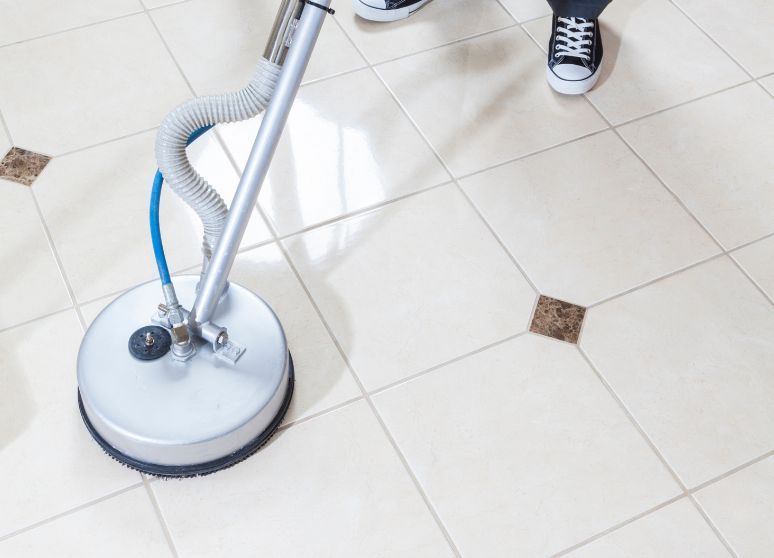
Professional tile and grout cleaning provides periodic deeper cleaning designed to address buildup that remains after ordinary floor maintenance.
Using both as part of a commercial floor care plan can help keep tile surfaces looking more consistent over time.
Protect the Appearance of Your Commercial Tile Floors
Tile may be durable, but grout requires consistent attention to stay looking clean in a busy commercial environment.
Restaurants must contend with food, grease, and spills. Offices face constant tracked-in soil in entrances, lobbies, break rooms, and restrooms. Retail stores handle continuous customer traffic that can quickly darken grout along major walkways.
Regular removal of loose soil, clean mop water, appropriate cleaning products, prompt spill response, and extra attention to high-traffic areas can all help control buildup between deeper cleanings.
When routine maintenance is no longer producing the results your floors need, professional tile and grout cleaning can provide a deeper level of soil removal.
MAK Cleaning LLC provides professional commercial tile and grout cleaning and floor care for businesses throughout the Denver area. Whether you manage a restaurant, office, retail store, or other commercial property, MAK Cleaning LLC can help remove accumulated soil and refresh the appearance of your tile and grout.
Frequently Asked Questions
How often should commercial grout be professionally cleaned?
There is no single schedule for every property. Cleaning frequency depends on foot traffic, business type, types of contamination, routine maintenance practices, and the condition of the grout. Restaurants and high-traffic retail spaces may require more frequent attention than lightly used commercial areas.
Why does grout stay dirty even after mopping?
Grout lines are often recessed and may be porous, allowing soil to accumulate where a mop cannot easily reach. Dirty mop water and cleaning product residue can also contribute to discoloration. Periodic deep cleaning may be necessary to remove embedded buildup.
How can restaurants keep grout cleaner?
Remove loose soil before mopping, clean spills promptly, change dirty mop water, use properly diluted cleaning products, and give grease-prone and high-traffic areas additional attention. Periodic professional tile and grout cleaning can address deeper buildup.
Does sealing grout keep it from getting dirty?
No. Depending on the grout and sealer, sealing may help reduce how readily certain contaminants penetrate the surface, but it does not make grout stain-proof or maintenance-free. Sealed grout still requires routine cleaning.
When should a business schedule professional tile and grout cleaning?
Professional cleaning may be appropriate when grout remains dark after routine mopping, high-traffic areas are visibly discolored, grease or residue has accumulated, or regular janitorial cleaning is no longer restoring a consistent appearance.