Post-Construction Cleaning: What Happens After the Contractors Leave
A construction or renovation project can completely transform a commercial property, but the work is not necessarily finished when the contractors pack up their tools. Even after the major construction debris is removed, the space may still be covered in fine dust, adhesive residue, packaging materials, footprints, and other evidence of the work that just took place.
That is where post-construction cleaning comes in.
Post-construction cleaning is a detailed cleaning process designed to take a newly built, remodeled, or renovated space from construction-ready to occupant-ready. It goes beyond ordinary janitorial cleaning by addressing the dust and debris created specifically during construction activities.
For offices, retail stores, restaurants, apartment buildings, and other commercial properties, professional post-construction cleaning can be an important final step before employees, tenants, customers, or visitors enter the finished space.
What Is Post-Construction Cleaning?
Post-construction cleaning is the cleanup performed after construction, remodeling, or renovation work has been completed or reached a stage where detailed cleaning can begin.
The exact scope depends on the project. A small office renovation may require significantly less work than the construction of an entire commercial building.
Post-construction cleaning can include removing remaining debris, eliminating construction dust, cleaning surfaces, detailing fixtures, cleaning floors, and preparing rooms for their intended use.
The objective is not simply to make the property look better. It is to remove the residual mess associated with construction so the finished work can actually be seen and the space can be comfortably used.
Why Is There So Much Dust After Construction?
Construction activities can generate an enormous amount of fine dust.
Drywall work, sanding, cutting, drilling, flooring installation, demolition, and other activities release particles that can travel well beyond the immediate work area.
Construction dust can settle on:
- Floors
- Walls
- Window sills
- Baseboards
- Cabinetry
- Doors and frames
- Light fixtures
- Shelving
- Counters
- Equipment
- Other horizontal surfaces
Because some construction particles are extremely fine, they can settle again after an initial cleaning. This is one reason post-construction cleanup may require more detailed attention than ordinary dusting.
Construction Cleanup Starts With Debris Removal
Before detailed cleaning begins, larger debris and leftover materials generally need to be removed from the work area.
Depending on the project and the responsibilities established between contractors and cleaning providers, this might include manageable amounts of:
- Packaging
- Cardboard
- Protective coverings
- Small construction scraps
- Labels
- Tape
- Other discarded materials
Large quantities of construction waste or hazardous materials may require specialized disposal and are not necessarily part of a standard post-construction cleaning service.
The cleaning scope should therefore be established before work begins so everyone understands which materials will be handled by the contractor and which will be addressed by the cleaning provider.
Fine Dust Requires Detailed Cleaning
Once larger debris has been addressed, attention turns to the fine dust coating the property.
This can be one of the most time-consuming portions of post-construction cleaning because dust can settle virtually anywhere.
Simply cleaning the floors will not solve the problem if dust remains on shelves, trim, fixtures, and other surfaces. As activity resumes in the building, remaining particles can be disturbed and settle onto freshly cleaned areas again.
A thorough approach works systematically through the space instead of focusing only on the most visible surfaces.
Cleaning From Top to Bottom Matters
Post-construction cleaning is often most effective when higher surfaces are addressed before lower ones.
If dust is removed from an elevated surface after the floor has already been cleaned, some of that debris may simply fall onto the finished flooring.
A logical cleaning sequence can include higher accessible surfaces first, followed by walls and fixtures as appropriate, counters and cabinetry, baseboards, and finally flooring.
The exact process depends on the property and the materials involved, but working methodically helps prevent unnecessary re-cleaning.
Walls, Trim, and Baseboards Need Attention Too
Freshly renovated rooms can still look unfinished when dust is coating the edges of the space.
Baseboards and trim are especially prone to collecting fine construction particles because their horizontal edges provide an easy place for dust to settle.
Door frames, window trim, ledges, and other architectural details can have the same problem.
Cleaning methods need to be appropriate for newly painted or finished surfaces. Fresh finishes may require special care, so cleaning should always account for the manufacturer’s or contractor’s recommendations.
Windows Can Reveal the Construction Mess
Windows and surrounding surfaces often need significant attention after renovation work.
Dust may settle on glass, frames, tracks, and sills. Stickers, labels, or other installation-related materials may also remain after new windows or doors are installed.
Cleaning these areas can make a dramatic difference because natural light tends to highlight fingerprints, dust, streaks, and residue.
Care must be taken around newly installed glass and specialty surfaces to avoid scratches or damage.
Cabinets and Shelving Can Collect Hidden Dust
New cabinetry may look pristine from the outside while still containing construction dust inside drawers, shelves, and corners.
This is particularly important in offices, break rooms, kitchens, retail displays, and other spaces where cabinets will soon be filled with supplies or products.
Post-construction cleaning may include wiping accessible cabinet interiors and exteriors based on the agreed scope.
Cleaning these areas before the building is fully occupied is much easier than discovering construction dust after cabinets have already been filled.
Light Fixtures and Other Details Can Be Easy to Miss
One of the differences between general cleanup and detailed post-construction cleaning is attention to smaller surfaces.
Construction dust can settle on or around:
- Light fixtures
- Switch plates
- Door hardware
- Handrails
- Window ledges
- Cabinet hardware
- Vents and grilles
- Built-in shelving
The appropriate cleaning scope varies by project, but these details can make the difference between a space that merely looks finished from a distance and one that actually feels ready for use.
Floor Cleaning Is a Major Part of Post-Construction Cleanup
Floors handle much of the abuse during a construction project.
Workers repeatedly travel through the property carrying tools and materials. Dust settles on the surface, footprints accumulate, and installation activities can leave behind residue.
Different flooring materials require different cleaning methods.
A commercial property may contain:
- Carpet
- Tile and grout
- Vinyl flooring
- Hardwood
- Concrete
- Other specialty flooring
Each surface should be cleaned according to its material and condition rather than applying the same cleaning method throughout the building.
Post-Construction Carpet Cleaning
Carpet installed before all construction work is finished can collect significant amounts of fine dust and tracked-in soil.
Even when protective coverings are used, particles may reach exposed carpeted areas.
Thorough vacuuming is an important starting point for removing dry construction soil.
Depending on the condition of the carpet and the project requirements, professional carpet cleaning may also be appropriate before the space is occupied.
New carpet should always be maintained according to manufacturer recommendations.
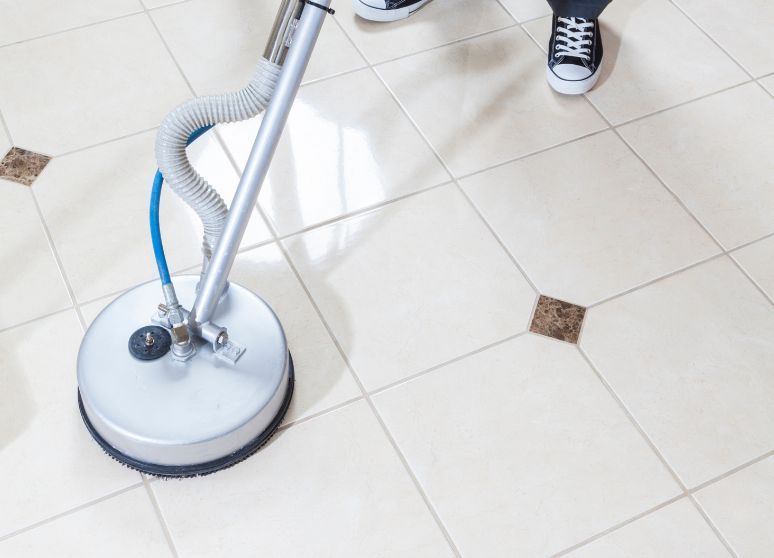
Tile and Grout Cleaning After Construction
Tile surfaces can collect dust, footprints, and installation-related residue during construction.
Grout lines can be particularly challenging because fine particles may settle into the recessed surface.
Routine mopping may remove surface soil while leaving grout looking dull.
Professional tile and grout cleaning may be useful when construction-related soil remains after standard cleanup, provided the cleaning method is appropriate for the tile and grout involved.
Hard Floor Cleaning Requires the Right Approach
Commercial buildings often contain vinyl, hardwood, or other hard flooring materials that require specific care.
Construction dust can make these surfaces look dull, but aggressive cleaning is not always appropriate.
Using the wrong chemicals, tools, or amount of moisture can potentially affect a new floor or its finish.
Professional cleaners should identify the flooring material and select a suitable cleaning process rather than treating every hard surface the same way.
Bathrooms Need a Final Detailed Cleaning
Newly constructed or renovated restrooms may have brand-new fixtures but still need significant cleaning before use.
Construction dust can settle on sinks, counters, toilets, partitions, mirrors, dispensers, floors, and other surfaces.
Fingerprints and installation residue may also remain on fixtures and hardware.
A final restroom cleaning helps transition the space from an active construction area into a facility ready for employees, customers, or tenants.
Break Rooms and Kitchens Need Special Attention
Commercial kitchens and office break rooms should be thoroughly cleaned before food, dishes, appliances, or supplies are placed into use.
Construction dust may be present on counters, cabinets, shelving, floors, and other surfaces.
If cabinets and drawers are included in the cleaning scope, completing this work before they are filled can save considerable time later.
New appliances and fixtures may also have labels, fingerprints, or installation-related residue requiring appropriate removal.
Post-Construction Cleaning for Offices
An office renovation can leave dust throughout workspaces, conference rooms, hallways, reception areas, and break rooms.
Before employees return, cleaning may include attention to floors, horizontal surfaces, cabinetry, windows, trim, and shared spaces.
Scheduling the final cleaning before desks, computers, paperwork, and other equipment are fully moved into place can make the process much easier.
For occupied offices undergoing phased renovations, cleaning may need to be coordinated around employees and ongoing construction activities.
Post-Construction Cleaning for Retail Stores
Retail construction and remodeling projects often operate under tight deadlines because every day a store remains closed can affect business operations.
After contractors finish, shelves, displays, checkout areas, windows, floors, and customer-facing surfaces may all require cleaning before merchandise is stocked and doors open.
Construction dust is particularly noticeable on glossy displays, glass, dark shelving, and polished floors.
Coordinating post-construction cleaning with fixture installation and merchandise stocking can help prevent newly cleaned areas from immediately becoming dusty again.
Post-Construction Cleaning for Restaurants
Restaurants present additional challenges because many surfaces will eventually be used around food preparation and service.
Dining areas, kitchens, restrooms, bars, entrances, and storage spaces may all require attention after construction.
The cleaning process should be coordinated with contractors, equipment installers, and any applicable food-safety requirements.
A detailed final cleanup can help ensure construction dust and debris are addressed before normal restaurant operations begin.
Post-Construction Cleaning for Property Managers
Property managers may need post-construction cleaning after tenant improvements, common-area renovations, unit remodeling, or larger capital projects.
In these situations, timing is often critical.
The cleaning may need to happen after contractors finish but before a tenant moves in, an inspection occurs, or a renovated area reopens.
Clear communication between the property manager, contractor, cleaning company, and other vendors can help prevent scheduling conflicts.
Rough Cleaning vs. Final Cleaning
Some construction projects involve multiple cleaning stages.
A rough cleaning generally occurs while the property is still actively transitioning through construction. It may focus more heavily on removing debris and making the area manageable for the next stage of work.
Final cleaning occurs closer to project completion and focuses on the detailed work necessary to prepare the property for occupancy or use.
Depending on the size and complexity of the project, more than one round of cleaning may be necessary.
What Is a Final Touch-Up Cleaning?
Even after a detailed cleaning, some construction projects benefit from a final touch-up.
This can happen because contractors return to complete punch-list items, installers perform final work, or fine dust continues settling after the first cleaning.
A touch-up cleaning addresses the new fingerprints, footprints, dust, and small amounts of debris created after the primary cleaning.
This stage can be particularly useful immediately before a grand opening, tenant move-in, or final presentation of the property.
When Should Post-Construction Cleaning Be Scheduled?
Timing matters.
If detailed cleaning is performed while contractors are still sanding, cutting, drilling, or moving materials through the space, freshly cleaned surfaces can quickly become dirty again.
Whenever possible, final cleaning should be coordinated for a point when dust-producing construction activities are complete.
However, larger projects may require phased cleaning as different sections of the property are completed.
Discussing the construction schedule in advance helps determine the most practical approach.
How Long Does Post-Construction Cleaning Take?
The amount of time required depends on the property and project.
Factors that can affect cleaning time include:
- Square footage
- Amount of construction dust
- Type of renovation
- Number of rooms
- Flooring materials
- Amount of remaining debris
- Number of windows and fixtures
- Whether cabinets and shelving require interior cleaning
- Accessibility
- Whether multiple cleaning phases are needed
A professional cleaning company can evaluate the property and establish a scope based on its actual condition rather than assuming every construction project requires the same amount of work.
Why Ordinary Janitorial Cleaning May Not Be Enough
Routine janitorial services are designed for maintaining an occupied commercial property. Post-construction cleaning addresses a different type and volume of soil.
Fine construction dust can coat large portions of a building, while adhesives, labels, packaging, and other construction-related materials may require additional attention.
That does not mean janitorial cleaning and post-construction cleaning are unrelated. Once the construction cleanup is complete and the building becomes operational, recurring janitorial service can take over the ongoing maintenance.
What Should Be Completed Before the Cleaners Arrive?
The exact requirements depend on the project, but communication with the cleaning company beforehand is important.
Ideally, major construction activities should be completed in the areas scheduled for final cleaning.
Contractors should also understand which debris and materials they are responsible for removing.
Before cleaning begins, it can be helpful to confirm:
- Which areas are ready for cleaning
- Which areas remain under active construction
- What debris will remain
- Which surfaces require special care
- Whether utilities are available
- Access procedures for the property
- Project deadlines
- Any areas that should not be cleaned
A clearly defined scope reduces confusion and helps the project move efficiently.
Commonly Missed Areas After Construction
Construction cleanup can look complete until you inspect the details.
Areas that may be overlooked include:
- Window tracks
- Door frames
- Baseboard edges
- Cabinet interiors
- Closet shelves
- Top edges of fixtures
- Corners
- Areas underneath movable items
- Restroom partitions
- Hardware and handles
These details are especially noticeable once the larger surfaces have been cleaned.
Can You Handle Post-Construction Cleaning In-House?
For a very small project, an in-house maintenance staff may be able to handle basic cleanup.
Larger renovations can be much more demanding.
Construction dust can spread throughout a building, and detailed cleaning may require considerable labor at exactly the time a business is trying to prepare for reopening or move-in.
Professional post-construction cleaners can provide the labor, equipment, and structured process needed to work through the property efficiently.
Outsourcing the final cleaning can also allow employees and property staff to focus on getting normal operations ready.
Post-Construction Cleaning Helps Reveal the Finished Project
After weeks or months of construction, it can be difficult to appreciate new flooring, fixtures, paint, cabinetry, and finishes when everything is covered in dust.
Detailed cleaning is what finally reveals the completed space.
Removing construction residue allows new surfaces to look the way they were intended and gives property owners, tenants, and customers a much better first impression.
For businesses preparing to reopen, this transition from construction site to finished commercial environment is an important final stage of the project.
Prepare Your Property for Opening Day
The contractors may be finished, but a commercial construction project is not truly ready for everyday use until the remaining dust and debris have been addressed.
Post-construction cleaning bridges the gap between the end of construction and the beginning of normal operations.
From detailed dust removal and floor cleaning to attention around windows, fixtures, cabinets, restrooms, and other surfaces, a thorough final cleanup can help prepare the property for employees, tenants, customers, and visitors.
MAK Cleaning LLC provides professional post-construction cleaning for commercial properties throughout the Denver area. Whether you are completing an office renovation, retail buildout, restaurant remodel, tenant improvement, or another commercial project, MAK Cleaning LLC can help get the finished space cleaned and ready for what comes next.
Frequently Asked Questions
What does post-construction cleaning include?
The exact scope varies by project but may include construction dust removal, surface cleaning, floor care, cleaning around windows and fixtures, restroom cleaning, cabinetry cleaning, and removal of manageable leftover debris. The scope should be established with the cleaning provider before work begins.
When should post-construction cleaning be done?
Final cleaning is generally most effective after major dust-producing construction activities have been completed. Larger projects may require multiple cleaning phases or a final touch-up after contractors complete punch-list work.
How is post-construction cleaning different from regular janitorial cleaning?
Janitorial cleaning focuses on routine maintenance in an occupied building. Post-construction cleaning addresses the heavier dust, debris, residue, and detailed cleanup associated with construction and renovation work.
Do new floors need to be cleaned after construction?
They often do. New floors can collect construction dust, footprints, and installation-related residue before the project is finished. The cleaning method should be appropriate for the specific flooring material and any manufacturer requirements.
Can post-construction cleaning be completed before contractors are completely finished?
Some projects use phased cleaning as sections are completed. However, performing the final detailed cleaning while significant sanding, cutting, drilling, or other dust-producing work continues can result in surfaces becoming dirty again. Coordinating the cleaning schedule with the contractor can help avoid unnecessary re-cleaning.